Why Starbucks Gift Cards Are the Most Predictable Holiday Gift This Year
When it comes to holiday gift shopping, gift cards rank as the second most popular gift this year, with the National Retail Federation projecting total spending to reach $29 billion. Starbucks expects one in five Americans to receive a Starbucks Card this season, with more than $60 million loaded onto cards on December 24 alone in the United States and Canada.
Predictability works in Starbucks’ favor because it seamlessly integrates into everyday life. Most people already stop there regularly, know what they like, and can use a card without thinking twice. Giving one feels low-risk and practical, the kind of gift that gets used instead of set aside. There’s no guesswork involved, just the comfort of knowing it will likely turn into a familiar drink on a busy morning or an easy treat during the week.
Convenience Always Wins in December
Holiday shopping rewards shortcuts and Starbucks cards deliver one in a clean, recognizable format. Physical cards are ideal for last-minute runs through grocery stores, while digital cards are delivered instantly through apps and text messages. Load amounts typically range from $5 to $100, which removes price pressure and decision fatigue.
Gen Z also plays a role here. Approximately 46 percent of Gen Z shoppers indicate that they would like to receive a gift card, and 43 percent of shoppers overall plan to purchase at least one. That preference pushes gift cards beyond fallback territory and into expectation status.
A Product Built for Repeat Use
Starbucks introduced its first gift card in 2001, when it operated fewer than 5,000 locations worldwide. Nearly 25 years later, the cards are sold in 45 markets and are tied directly to Starbucks Rewards. Registering a card allows users to earn points toward free drinks and food, encouraging spending beyond the original balance. This is great because the gift does not end at redemption. It encourages return visits, upgrades, add-ons, and reloads. The card feels like a closed loop that keeps people coming back without needing reminders.
The Quiet Financial Upside
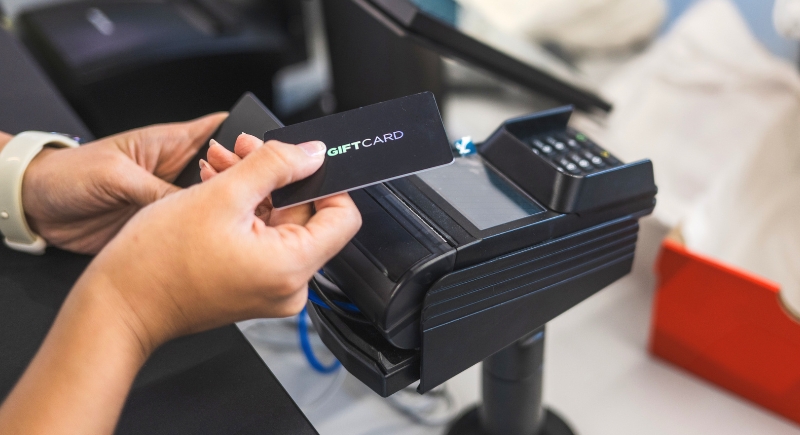
Image via iStockphoto/simon2579
Gift cards generate cash upfront, and in some cases, they never get fully used. Companies track this pattern as breakage, the portion of balances that go unredeemed. In its most recent fiscal year, Starbucks recognized about $200 million in breakage revenue at company-operated stores and $22 million at licensed locations.
As of late September, the company held $1.8 billion in unredeemed gift card balances. That figure climbed year over year. For comparison, Target reported $1.2 billion earlier this year, while Amazon reported $5.4 billion at the end of 2024. Those numbers demonstrate how gift cards serve as short-term, interest-free capital tied to consumer spending habits.
Familiarity Beats Creativity
Starbucks gift cards avoid the most significant holiday risk: uncertainty. The brand already plays a role in daily routines. Coffee runs happen before work, between errands, and during social breaks. Gifting something already woven into behavior feels thoughtful without trying to impress. The design is recognizable, the use is simple, and the value is flexible. Predictability does not feel boring when it solves a problem everyone shares during the holidays.