What Actually Happens to Your Cognitive Functions After Seven Sleepless Days
Missing a single night of sleep can leave somebody cranky and unfocused. If that happens across seven straight days, the brain starts behaving in unsettling, unpredictable, and sometimes dangerous ways. Memory slips, emotions swing, language breaks down, and reality itself can begin to blur. Scientists have studied prolonged sleep deprivation for decades, and the results show just how dependent cognitive functions are on proper rest.
Memory Stops Working Like It Normally Does

Credit: Getty Images
Short-term memory collapses during prolonged sleep deprivation. By the later stages, people struggle to retain conversations, instructions, or even simple sequences. The brain loses efficiency in transferring information into usable memory. Sleep-deprived people often repeat themselves or forget what they were doing in the middle of a task.
Your Sense of Time Starts Distorting

Credit: Canva
After several sleepless days, it may appear as if time passes more quickly or it is unusually slow. People lose track of how long tasks take and may misjudge how much time has passed between events. Researchers have linked this to impaired activity in attention and timing networks inside the brain. These timing errors can become dangerous when driving or operating machinery.
Language Skills Begin Slipping

Credit: Canva
Some sleep-deprived people struggle to find words, lose track of sentences halfway through speaking, or misunderstand what somebody just said. Verbal fluency drops because the brain’s executive systems stop coordinating efficiently. Speech can become slower, fragmented, repetitive, or strangely emotional.
Decision-Making Gets Reckless

Credit: Getty Images
The longer someone stays awake, the worse their risk assessment ability becomes. Judgment tilts toward impulsive choices, emotional reactions, and poor planning. Severely exhausted people have been known to take bigger risks during gambling. This is because sleep deprivation weakens the prefrontal cortex, which normally supports awareness of consequences, restraint, and logical evaluation.
Hallucinations Start Creeping In
Credit: Canva
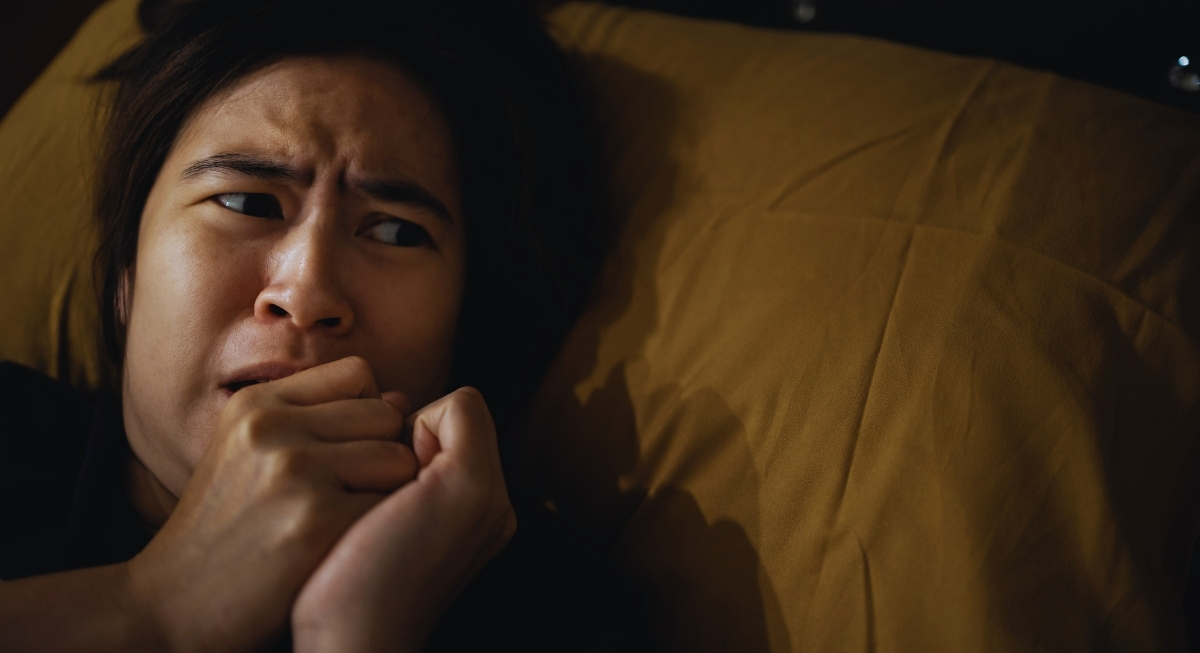
In the later stages of severe sleep deprivation, the brain can begin to blend dreams with reality. People may see movement in shadows, hear sounds that are not there, or misinterpret ordinary objects. Visual distortions become more common after multiple days awake. Historical sleep deprivation experiments documented participants seeing insects crawling on walls, distorted faces, or flashes of light that did not exist.
Emotional Control Falls Apart

Credit: Getty Images
Mood regulation takes a hard hit after repeated sleepless nights. The amygdala becomes more reactive while the brain regions that regulate emotional responses lose control. Negative experiences feel more intense than they normally would. People may overreact to harmless comments, become unusually anxious, or feel emotionally detached from situations that would normally matter to them.
Attention Span Breaks Down

Credit: Getty Images
Sleep-deprived people often start experiencing “microlapses” where focus disappears for seconds at a time. You could be staring at a screen or the road while your brain temporarily stops processing information correctly. Tasks that require sustained concentration become nearly impossible. Reaction times slow dramatically. That’s one reason prolonged sleep deprivation can resemble alcohol impairment.
Reality Testing Gets Worse

Credit: Canva
In more severe cases, the brain becomes less reliable at distinguishing between assumptions and facts. Prolonged sleep loss has triggered temporary psychosis-like symptoms that faded only after recovery sleep. Suspicion, paranoia, and irrational thinking can appear even in healthy people. Military survival training and interrogation studies have historically treated sleep deprivation as psychologically destabilizing.
Motor Coordination Starts Failing

Credit: Getty Images
Simple physical tasks become clumsy. Hand-eye coordination weakens, balance suffers, and reflexes slow. The brain’s communication systems stop syncing efficiently. Exhausted people can stumble, drop objects, or drift while driving. Even typing, writing, and precision-based tasks are noticeably harder.
The Brain Begins Entering “Sleep” Without Permission

Credit: Getty Images
One of the strangest effects involves local sleep episodes. Parts of the brain can briefly shut down even while the person appears awake. Neuroscientists discovered that certain brain cells can enter sleep-like states independently after prolonged exhaustion, even before the entire body falls asleep. These episodes help explain why severely sleep-deprived people sometimes perform actions they cannot later remember clearly.