Secret Senses Humans Have But Completely Ignore
Most people learned in school that humans have five senses: sight, sound, smell, taste, and touch. Modern neuroscience paints a busier picture, as researchers now argue that the human body runs on dozens of sensory systems working simultaneously. Many operate in the background and rarely get credit. Here are 10 lesser-known senses that shape daily life.
Proprioception

Credit: pexels
Typing without looking at the keyboard depends on a hidden tracking system called proprioception. Receptors in muscles and joints send constant updates to the brain about limb position. Charles Spence of Oxford University has described it as one of the clearest examples of a sense people use nonstop but rarely notice.
Interoception

Credit: Canva
A racing pulse before a big presentation or the hollow feeling that signals hunger both come from interoception. This system monitors internal organs and helps maintain balance inside the body. Researchers link strong interoceptive awareness to emotional regulation, since bodily cues often shape how situations are interpreted.
Equilibrioception

Credit: pexels
Anyone who has felt the odd tilt during airplane takeoff has experienced equilibrioception in action. Inside the inner ear, fluid moves through semicircular canals and detects acceleration and head position. The eyes may see a stable cabin, but the ears report backward motion. The brain merges those messages and produces the sensation of tilting.
Nociception
Credit: Canva
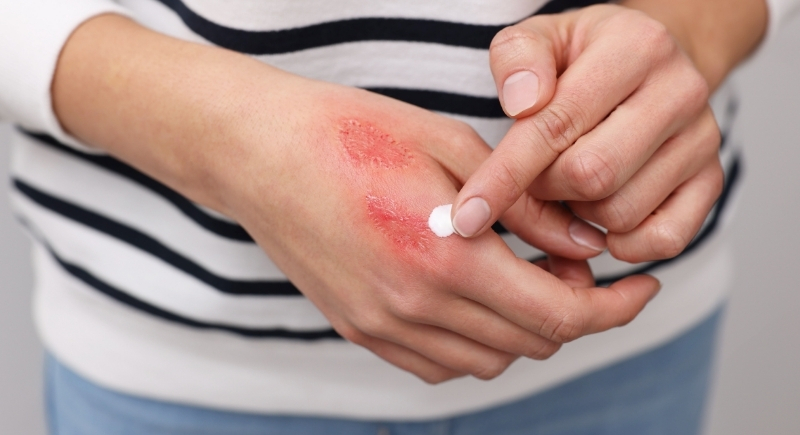
Pain has its own network. Nociceptors respond to potentially harmful stimuli such as extreme heat or tissue damage. They send rapid warnings through the spinal cord and to the brain. This system works independently of basic touch. Without nociception, injuries would go unnoticed, and healing would become far more complicated.
Thermoception

Credit: Getty Images
Cold tile under bare feet or the sting of a hot steering wheel on a summer afternoon activates thermoception. Tiny receptors in the skin detect temperature shifts within a narrow range. The brain then adjusts behavior long before tissue damage occurs. Scientists separate this system from ordinary touch because it uses distinct pathways.
Sense Of Body Ownership
Credit: Youtube
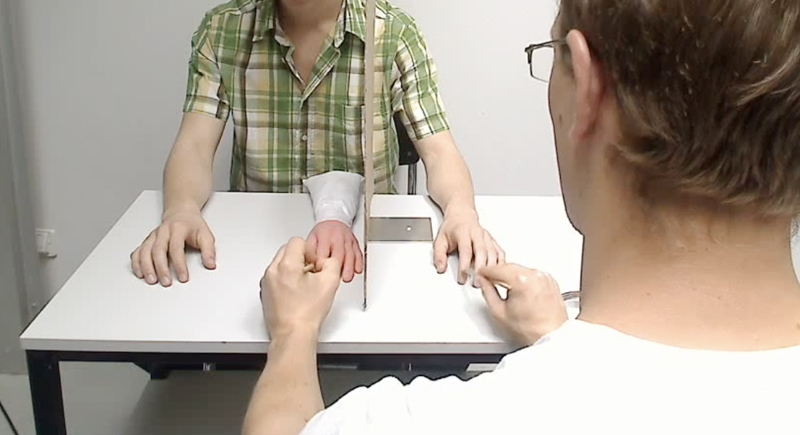
The feeling that a hand belongs to the body seems obvious until it is challenged. In the rubber hand illusion, researchers hide a participant’s real hand and stroke a visible fake one in synchrony. Many people begin to experience the artificial hand as their own within minutes. Stroke patients can lose this sense altogether
Sense Of Agency

Credit: Getty Images
Agency is the feeling that one’s actions are self-generated. It sounds abstract, but it relies on measurable brain processes. When movement commands leave the motor cortex, the brain predicts the expected sensory outcome. If feedback matches the prediction, the action feels self-driven.
Flavor Integration

Credit: Canva
The tongue handles only five basic tastes. Sweet, salty, sour, bitter, umami. Everything else credited as flavor depends heavily on smell. As food is chewed, odor molecules travel from the mouth into the nasal cavity through the back of the throat.
Chronoception

Credit: Getty Images
Humans carry an internal timing system known as chronoception. It tracks the passage of seconds and minutes without a visible clock. Brain regions such as the basal ganglia and cerebellum contribute to this perception. Time can stretch during emergencies or shrink during focused activity.
Remote Touch

Credit: Canva
Researchers at Queen Mary University of London and University College London explored how people can detect objects without directly touching them. In the study, participants moved their fingers through sand to find a hidden object before actually making contact. Small changes in how the sand shifted gave clues about where the object was. In some conditions, participants identified its location with more than 70 percent accuracy.