NASA’s 10 Greatest Science Missions of All Time
NASA has launched hundreds of missions, but a small number genuinely reshaped how we understand space. These missions did more than reach distant places. They gave scientists entirely new ways to study planets, stars, and the origins of the universe.
Some carried humans beyond Earth for the first time. Others revealed details no one knew to look for. Each one answered major questions while opening new ones, changing how science approaches space exploration. Below are the missions that stand out for what they uncovered and why their impact still matters.
Apollo: First Human Exploration Of Another World
Credit: Wikimedia Commons
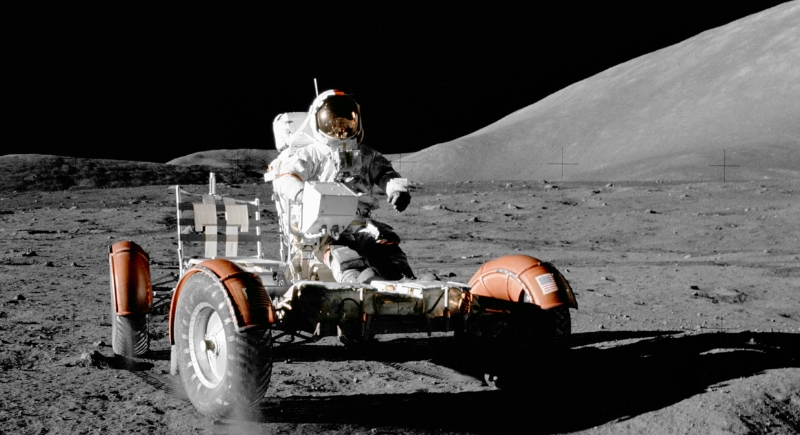
Between 1969 and 1972, six Apollo missions landed astronauts on the Moon and returned 842 pounds of lunar rock and soil. The samples revealed the Moon’s age, internal structure, and volcanic history. The NASA Apollo Program was the first to achieve a large collection of extraterrestrial materials returned to Earth. It transformed lunar science through direct geologic sampling.
Voyager: The Only Missions To Visit Uranus And Neptune
Credit: Wikimedia Commons
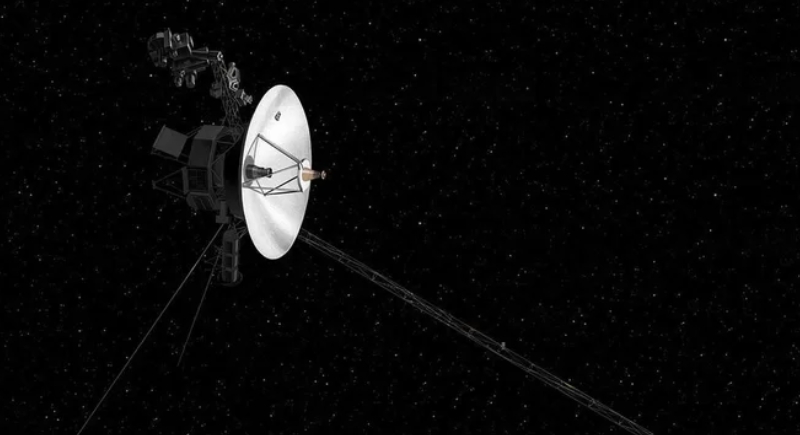
Voyager 1 and 2 launched in 1977 and became the first spacecraft to closely observe all four gas giants. Discoveries included active volcanism on Io, rings around Jupiter, and 10 new moons around Uranus. Voyager 2 remains the only mission to fly by Uranus and Neptune. Both probes are still transmitting from interstellar space.
Hubble: Long-Term Optical Imaging Above Earth’s Atmosphere
Credit: Wikimedia Commons
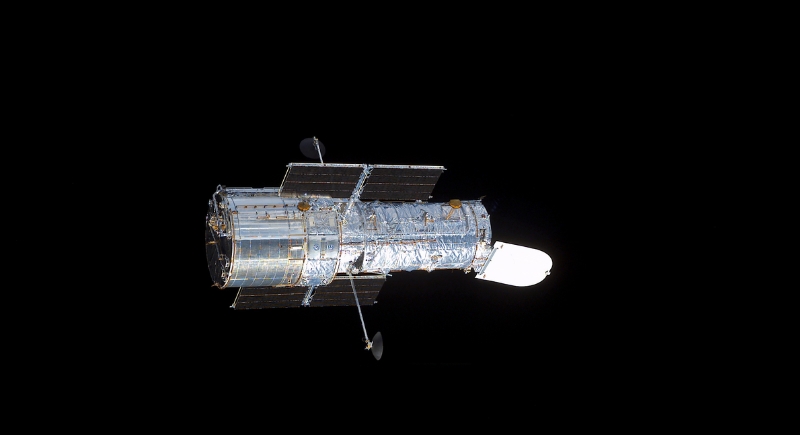
The Hubble Space Telescope has seen farther than any visible-light telescope before it. Its ultra-deep fields revealed galaxies that existed billions of years ago. Hubble also gave astronomers reliable data to calculate the universe’s expansion rate and confirmed that supermassive black holes were common, not rare.
Cassini-Huygens: Extended Study Of Saturn And Its Moons
Credit: Wikimedia Commons
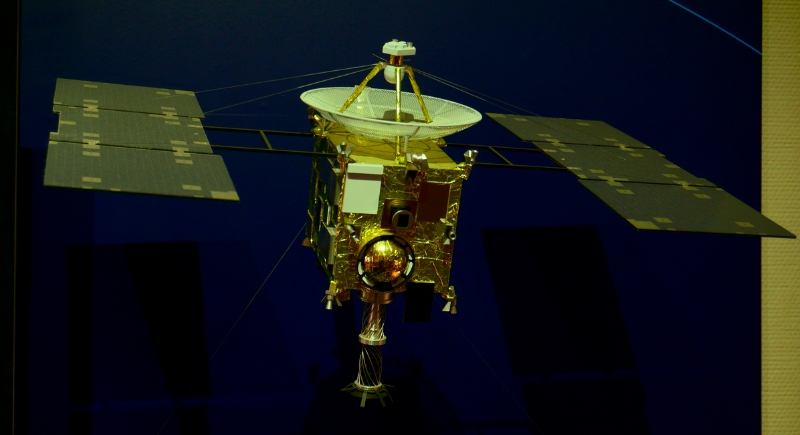
Cassini launched in 1997 and entered orbit around Saturn in 2004. It recorded detailed data on Saturn’s rings and weather patterns and discovered liquid methane lakes on Titan. The Huygens probe separated from Cassini and landed on Titan in 2005, and became the first spacecraft to touch down on an outer solar system moon.
Spirit And Opportunity: Longest-Running Surface Rovers On Mars
Credit: Wikimedia Commons
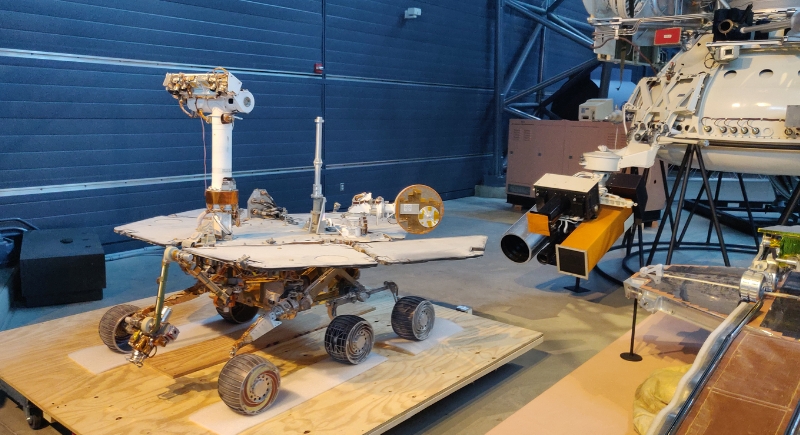
NASA’s twin Mars rovers landed in 2004 for a 90-day mission, but operated for years. They studied soil composition, traveled across Martian terrain for miles, and found multiple lines of evidence for past water activity. Their success significantly extended NASA’s surface science capability on Mars.
WMAP: Measuring The Cosmic Microwave Background
Credit: Wikimedia Commons
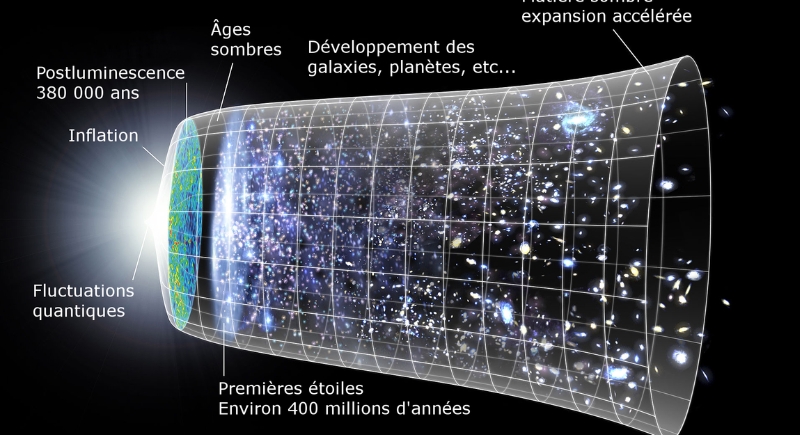
The Wilkinson Microwave Anisotropy Probe, or WMAP, launched in 2001 to scan the oldest light in the universe. That glow—left over from the Big Bang—told scientists the universe is 13.7 billion years old. It also confirmed that visible matter is just a tiny slice of what’s out there. Dark energy and dark matter dominate the rest.
Chandra: High-Resolution X-Ray Observations Of Distant Objects
Credit: Wikimedia Commons
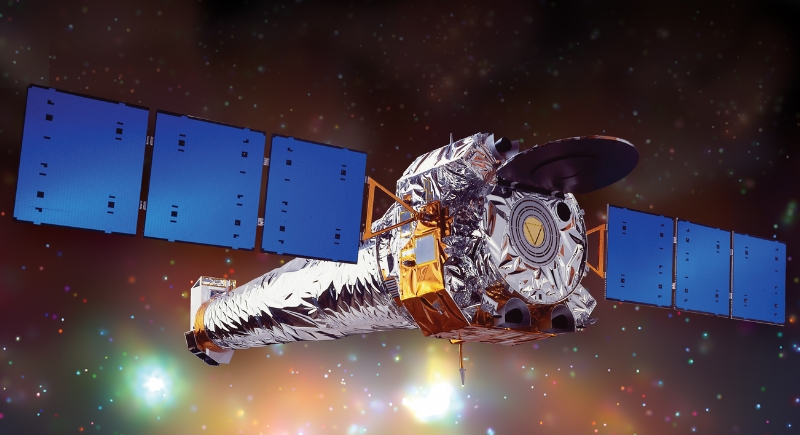
Operating since 1999, the Chandra X-ray Observatory revealed how black holes, neutron stars, and supernova remnants behave. It detected X-ray emissions 100 times fainter than any previous mission. Observations included detailed imaging of Cassiopeia A and showed the collapsed core of a supernova for the first time.
Pioneer: First Flybys Of Jupiter And Saturn
Credit: Wikimedia Commons
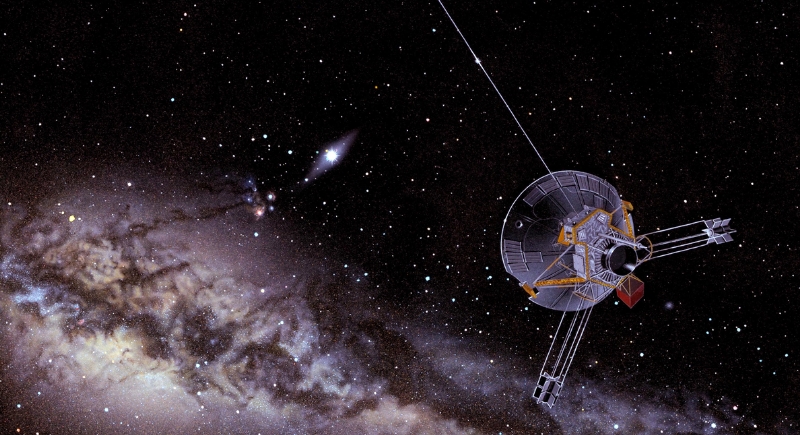
Before Voyager, Pioneer 10 and 11 were the first to pass through the asteroid belt and send back photos of Jupiter and Saturn. Pioneer 11 spotted a ring around Saturn that no one had seen and two small moons. Though contact is long lost, they became the earliest NASA missions to head toward interstellar space.
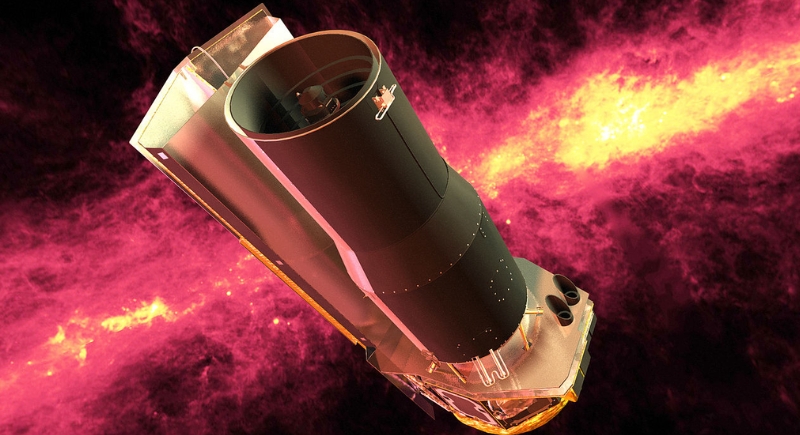
Spitzer: Infrared Detection Of Exoplanet Light
Credit: Wikimedia Commons
Spitzer launched in 2003 with infrared vision that could see through dust blocking ordinary telescopes. It revealed some of the earliest stars ever formed and became the first telescope to detect light directly from planets beyond our solar system. Regions once dismissed as empty turned out to be full of activity. Spitzer showed that dust hid active zones of star and planet formation.
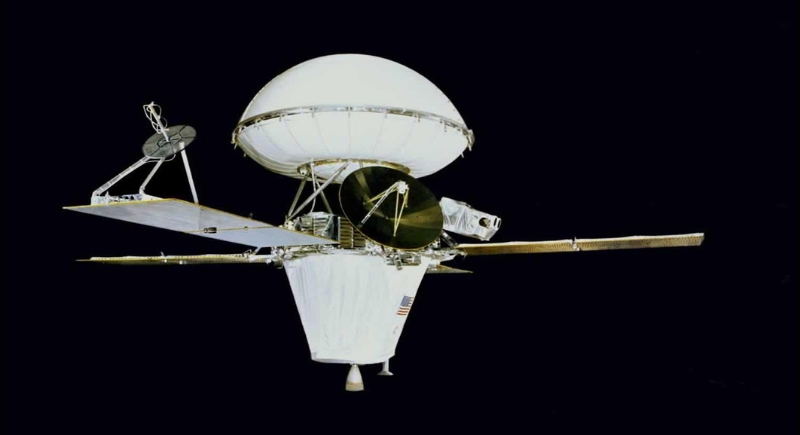
Viking: First U.S. Landing On Mars
Credit: Wikimedia Commons
In 1976, Viking 1 became the first U.S. mission to land and operate on Mars. It functioned for over six years, far exceeding expectations. Viking returned the first color photos from the surface, conducted soil chemistry experiments, and recorded daily weather data, laying the groundwork for future landers and rovers.