MTV Shuts Down Forever, Ending 44 Years of Music Television History
On December 31, 2025, MTV quietly ended the version of itself that once mattered most to music fans. After 44 years, its last round-the-clock music channels shut down, closing a chapter many people grew up with. MTV still exists in other forms, but the idea of turning on the TV and discovering music through videos is now gone.
When MTV launched on August 1, 1981, it changed how music felt. Songs were no longer just something you heard. You watched them, copied the clothes, learned the moves, and attached memories to the visuals. For years, MTV helped decide which artists broke through and what pop culture looked like.
That way of discovering music no longer fits real life. Streaming apps, social media, and instant video replaced waiting for shows and countdowns. By the end of 2025, most people had already stopped finding music through TV. Phones, playlists, and short clips took over long ago, so MTV’s final sign-off felt less like a surprise and more like realizing something familiar had quietly slipped away.
The Final Sign-Off
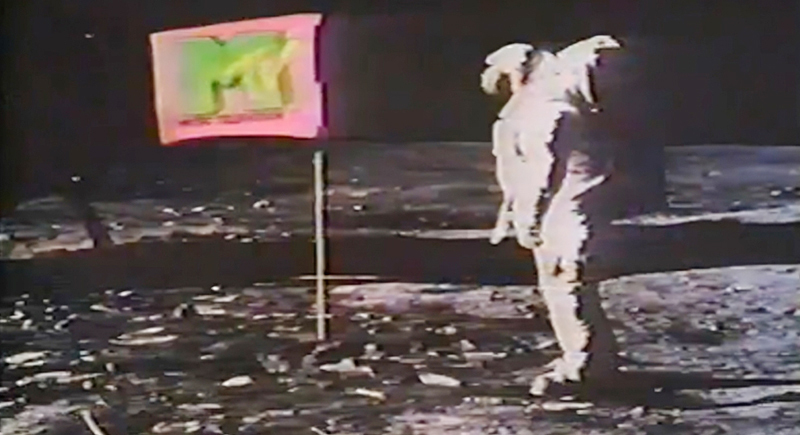
Image via Wikimedia Commons/NASA /Neil A. Armstrong/MTV
The shutdown affected MTV’s dedicated music-only channels across multiple regions, including the United Kingdom, Europe, Australia, Brazil, and parts of Asia. Channels such as MTV Music, MTV 80s, MTV 90s, Club MTV, and MTV Live stopped broadcasting as international distribution agreements expired.
The final moments of MTV Music carried deliberate symbolism. The channel signed off with “Video Killed the Radio Star,” the same song that opened MTV’s original broadcast more than four decades earlier. Clips of the sign-off quickly circulated online, with viewers framing the moment as a bookend to a shared cultural history.
Although the flagship MTV channel remains on air in several markets, its focus shifted away from music years ago. Reality programming and pop culture shows have defined its schedule for some time, leaving music videos largely absent from television.
Why Music Television Reached Its End

Image via Getty Images/Zolak
MTV’s decline unfolded gradually as audience behavior changed. Music videos became instantly accessible online. Discovery moved from programmed schedules to personalized feeds. Viewers stopped waiting for premieres and began finding new music through algorithms, short-form clips, and social sharing.
Corporate changes accelerated this transition. Following the 2025 merger that created Paramount Skydance, cost reduction became a central focus. Music-only channels, which require licensing, curation, and linear distribution, became harder to justify in a digital-first media environment.
Earlier in 2025, MTV had already shut down several long-running award shows, including the MTV Europe Music Awards and MTV Latin America’s MIAW Awards. The closure of the music channels followed that broader pattern of scaling back legacy formats.
What MTV Meant at Its Peak
For a generation, MTV was appointment viewing. Shows like “Total Request Live” turned fandom into a public event. Video premieres felt communal, and artists were shaped by both sound and image.
MTV also pushed music video production forward. Directors such as Hype Williams transformed videos into cinematic statements. Artists such as Michael Jackson, Madonna, Missy Elliott, Beyoncé, and many others utilized the platform to redefine pop stardom. Fashion trends, choreography, and visual storytelling traveled globally through the channel.
Beyond music, MTV reshaped television itself. Its early reality programming helped launch a genre that continues to dominate unscripted TV. The network’s influence extended far beyond playlists and charts, leaving a permanent mark on popular culture.
The End of a Shared Experience

Image via Canva/Yuganov Konstantin
The MTV brand has not disappeared, and discussions about future reinvention continue. Yet music television, as a dedicated space where videos were the main event, no longer exists.
That distinction matters. The shutdown represents more than nostalgia for cable television. It marks the loss of a shared cultural experience, one in which millions of people encountered the same songs and visuals simultaneously. Today, discovery happens individually, guided by algorithms rather than programmers.
For anyone who grew up watching countdowns, waiting for a favorite video, or leaving MTV on as a constant presence, December 31, 2025, carried real weight. It wasn’t just a channel going dark. It was the conclusion of how music once lived in everyday life. For 44 years, MTV didn’t simply document music history. It helped create it.