Morgan Freeman Converted His 124-Acre Ranch Into a Bee Sanctuary
By the early 2010s, warnings about pollinator decline had become increasingly hard to ignore. Federal agencies documented widespread colony losses, farmers began noticing drops in crop yields, and researchers emphasized how closely food systems depend on insects that were disappearing at an alarming pace. Honeybees and other pollinators support roughly three-quarters of the world’s crops, linking their survival directly to agriculture and the global food supply.
As those findings became more visible, a small number of people chose to respond beyond statements or campaigns. Instead of traditional advocacy, they focused on direct and measurable action. Among them was a well-known public figure who decided to turn concern into something tangible by transforming his own land into a haven for pollinators.
A Personal Response To A Global Problem
In 2014, Morgan Freeman began paying close attention to research on the decline of honeybee populations. Scientists had already identified Colony Collapse Disorder, a phenomenon linked to habitat loss, pesticides, parasites, and environmental stress. Instead of lending his name to an awareness campaign, Morgan did something different. He converted his 124-acre ranch in Mississippi into a dedicated sanctuary for honeybees. The project began with 26 hives brought in during the early stages of planning, followed by a gradual reshaping of the land to support pollinators in the long term.
The ranch offered something most conservation projects struggle to secure: space and consistency. Large stretches of uninterrupted land allow bees to forage without constant disruption, which improves colony stability. Morgan planted magnolia trees, lavender, clover, and fruit trees selected specifically to provide reliable nectar sources across seasons.
Early care involved feeding the bees sugar water while they adapted. Over time, the land itself became the support system. The goal was simple. Give bees what modern agriculture often takes away: a safe habitat, diverse food sources, and minimal interference.
A Hands-Off Approach With Clear Intent
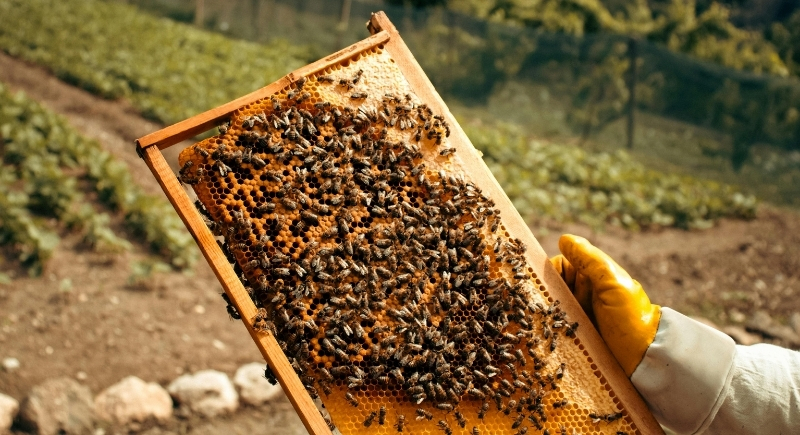
Image via Pexels/Samime
One detail that often surprises people is that Morgan does not harvest honey. The hives remain undisturbed, and beekeeping suits stay off. He has spoken publicly about interacting calmly with the bees and letting them operate without stress.
This is important because many conservation efforts stumble by mixing protection with extraction. This sanctuary focuses on repopulation and stability, not yield. It treats bees as essential contributors to ecosystems rather than resources to manage.
Why Bees Carry So Much Weight
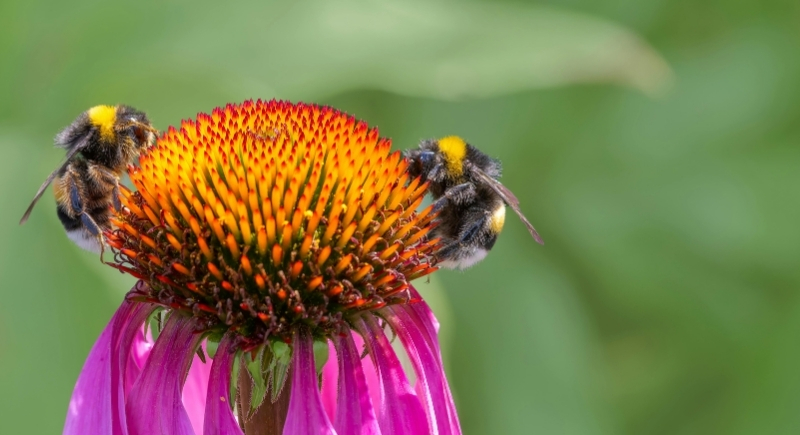
Image via Pexels/Siegfried Poepperl
Honeybees play a central role in food systems. In the United States alone, pollination services contributed about $19 billion to agricultural output in 2010. A separate University of Vermont study reported a 23 percent decline in wild bee populations between 2008 and 2013. Those losses ripple outward, affecting everything linked to plant reproduction.
Pesticides also remain a major factor. Neonicotinoids, widely used in commercial farming, impair bees’ ability to reproduce and navigate. Climate shifts also complicate survival by altering flowering cycles and food availability. Thus, when bees struggle, entire food chains feel the strain.
A Pattern in His Behavior
Environmental work has been part of Morgan’s life for years, with disaster relief efforts and climate-focused projects already sitting on his resume. The bee sanctuary fits into that pattern, though it stands out for its simplicity; no branding or production crews, but land reshaped with intention.
The decision also reflects something more practical. Bees offer a clear entry point into environmental responsibility. Their role is easy to understand. Their decline produces measurable consequences. Supporting them requires tangible changes rather than abstract promises.
The sanctuary continues operating without fanfare. Bees thrive, vegetation grows with pollination support, and other insects and birds benefit indirectly. The ranch now functions as a small but meaningful counterweight to industrial pressures facing pollinators nationwide.