If You Have a $2 Bill Printed Before 1976, You Might Be Sitting on a Goldmine
The $2 bill has been part of U.S. currency since the 1860s, but it still feels unusual in everyday use. Banks continue to issue it, the Federal Reserve continues to print it, and more than a billion are in circulation. Even so, many people hesitate to spend one, often tucking it away instead of handing it over at checkout.
That hesitation exists for a reason. A key change in how $2 bills were printed created a clear dividing line for collectors. Notes produced before that cutoff follow a very different value pattern than modern ones. For anyone holding an older $2 bill, small details can make the difference between spending money and a piece worth far more than its face value.
Why 1976 Became the Line in the Sand
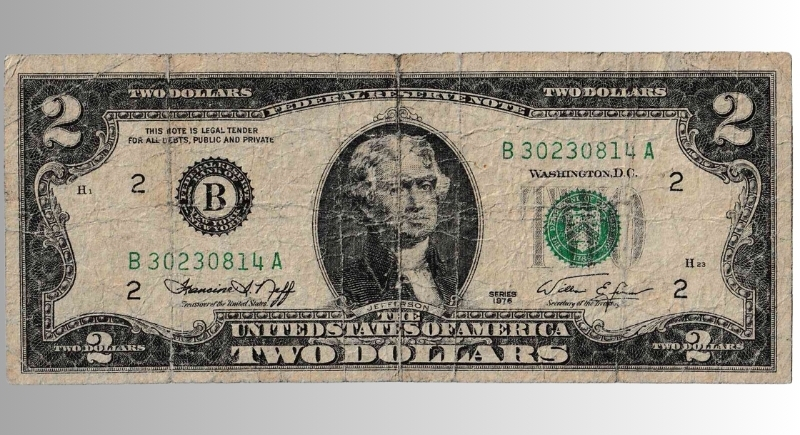
Image via Wikimedia Commons/Bureau of Engraving and Printing U.S. Department of the Treasury
The most significant modern shift occurred in 1976. That year marked the first major redesign in decades, keeping Thomas Jefferson on the front while replacing Monticello on the back with a scene depicting the signing of the Declaration of Independence.
That redesign resets collector interest, because notes printed before 1976 belong to an earlier series that still exist, especially in clean condition. Auction data consistently shows higher ceilings for these older notes, particularly those that never entered circulation.
Uncirculated $2 bills printed before 1976 can reach values well above $1,000. Certain examples tied to the late 1800s have sold for $ 3,800 to $ 4,500 when condition and originality align. However, circulated versions are often worth a few hundred dollars.
Condition Is the Real Deal Breaker
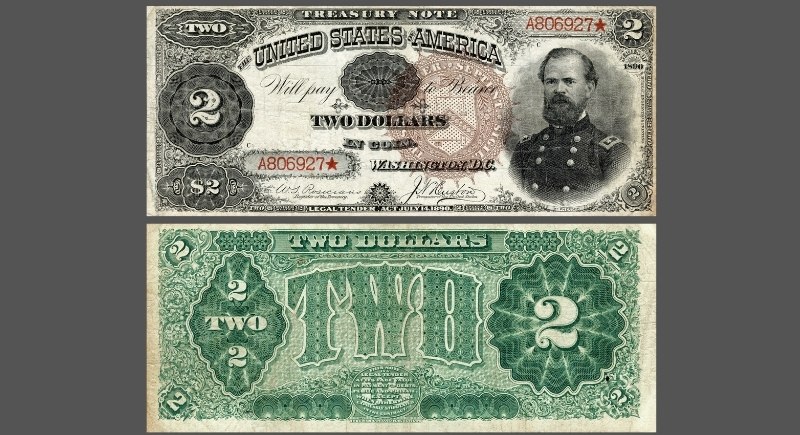
Image via Wikimedia Commons/wmc The Bureau of Engraving and Printing
Age alone does not guarantee value. Condition does the heavy lifting. Collectors pay premiums for notes that avoided wallets, registers, and decades of handling. Crisp paper, sharp corners, and clean surfaces separate high-dollar notes from average ones.
An uncirculated $2 bill from 1890 can sell for more than $2,800, while a note from the same year with visible wear often fails to reach $300. Red or brown seals rarely change the value on their own. Condition matters far more than ink color. Even bills from later periods only bring strong prices when they remain in near-perfect shape.
Furthermore, low serial numbers quickly attract attention. Printing errors also drive competition, especially misaligned seals or off-center cuts. These features turn an ordinary bill into a standout. An uncirculated $2 bill printed in 1995 has sold for around $500. A premium 2023 Federal Reserve set reached roughly $700. A rare 2003 note with a low serial number sold at auction for $ 2,400 before reselling for nearly $ 4,000. Age might open the door, but uniqueness pushes prices through it.
How Rare Are These Bills Really?
Rarity fuels the mythology surrounding $2 bills, although the reality often surprises many people. About 1.5 billion of the $2 bills remain in circulation today, according to Federal Reserve data. Annual print runs still reach into the hundreds of millions. The disconnect comes down to usage. Cash registers rarely include a dedicated slot for the denomination, so it feels unusual even though it remains legal tender.
That perception encourages people to save them, which slows circulation and keeps cleaner examples around longer. Older notes face the opposite challenge. Time naturally reduces supply, especially for uncirculated pieces. That imbalance keeps pre-1976 bills attractive to collectors hunting scarcity paired with history.
Getting a Real Answer Before Spending It
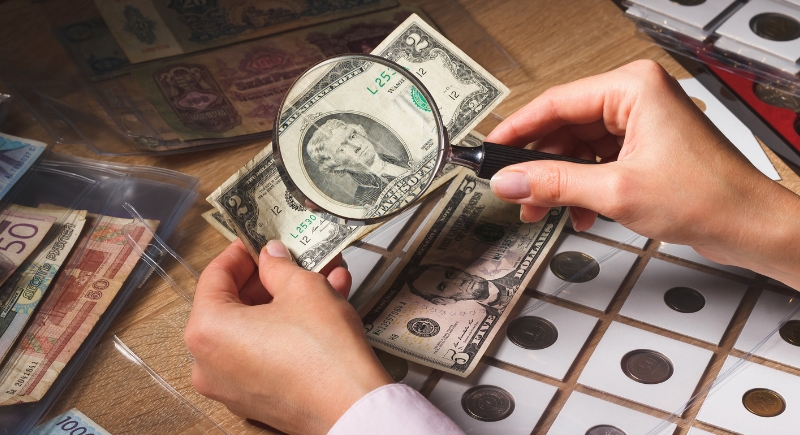
Image via iStockphoto/Igor Butseroga
Guesswork rarely helps. Experts recommend professional evaluation through verified coin and currency specialists. Grading confirms authenticity, condition, and market appeal, which protects against inflated expectations. Collectors tend to chase higher denominations no longer printed, yet strong demand still exists for exceptional $2 bills printed before 1976. Many remain tucked into drawers, envelopes, or old books, overlooked because the bill feels ordinary. But the value often hides in plain sight, quietly waiting for someone to check the date.