How Today’s Teens Are Different From Every Generation Before Them (And Why That’s OK)
The idea that teenagers have changed beyond recognition gets thrown around every generation. Adults have been saying some version of it for centuries. Still, what makes this instance so different is that, for once, the data actually backs it up. Teenagers today are growing up in a completely reshaped environment. And when you look closely, many of those differences make more sense than the criticism they often receive.
The “Teenager” Is a Relatively New Idea

Image via Canva/pixelshot
It’s easy to forget that the teenage years, as we understand them now, didn’t always exist. A few centuries ago, young people were expected to work, contribute to the household, and take on adult responsibilities early. In many cases, children entered the workforce well before their teens.
The modern version of adolescence took shape in the 20th century as education expanded and more young people stayed in school longer. Today’s changes are part of a longer pattern.
Growing Up Looks Slower—But That’s Not a Step Back

Image via iStockphoto/saiyood
By several measures, teens today are moving more gradually into adult life. Fewer are rushing to get driver’s licenses, working part-time jobs during high school, or engaging in behaviors that once defined teenage independence.
The numbers reflect that shift. Compared to previous decades, smaller shares of teens report dating, working for pay, or drinking alcohol. Teen pregnancy rates have also declined significantly. These changes point to a broader trend: milestones that once clustered in adolescence are now happening later or less frequently.
This reflects a different environment. Longer education paths, safer conditions, and closer family involvement have extended the timeline. In many ways, growing up has simply stretched out.
Technology Changed Social Life

Image via Canva/francescoridolfi.com
For the first time, a generation has grown up with constant access to digital communication. Many teens today have little or no memory of life before the internet became central to daily interactions.
Meeting someone new no longer depends entirely on face-to-face interaction. Much of the early interaction happens online.
Even language has adapted. Conversations happen through short messages, emojis, memes, and videos that carry tone and emotion in compact forms.
The 2012 Turning Point
Around 2012, patterns in teen behavior began to shift more noticeably. Smartphone ownership reached a critical threshold, and several long-standing trends—such as declines in driving, dating, and in-person socializing—became more pronounced.
Researchers have pointed to this period as a moment when changes accelerated. Time that might once have been spent out with friends or engaging in traditional teenage activities has increasingly moved online.
Safer Choices, Different Risks

Image via Pexels/Karola G
One of the most overlooked differences is the extent to which teens are safer in certain areas. Lower rates of drinking, driving, and other high-risk behaviors have reduced exposure to some of the dangers that defined earlier generations.
However, a different set of challenges has emerged. Reports of anxiety, depression, and emotional distress among teens have increased in recent years. Today’s teens are navigating a different balance of risks.
Some researchers suggest that heavy digital engagement, reduced in-person interaction, and social comparison play a role, though the exact causes remain under study.
Closer Families, Delayed Independence
Another noticeable shift is how teens relate to their parents. Many spend more time at home and report closer relationships with family than previous generations did.
That closeness often overlaps with delayed independence. Driving later, moving out later, and taking longer to settle into careers are all part of a broader pattern shaped by economic realities and changing expectations.
In a world where education takes longer and housing costs have risen, the path to adulthood is less direct than it once was. Teens are adjusting to that reality.
More Aware, More Inclusive
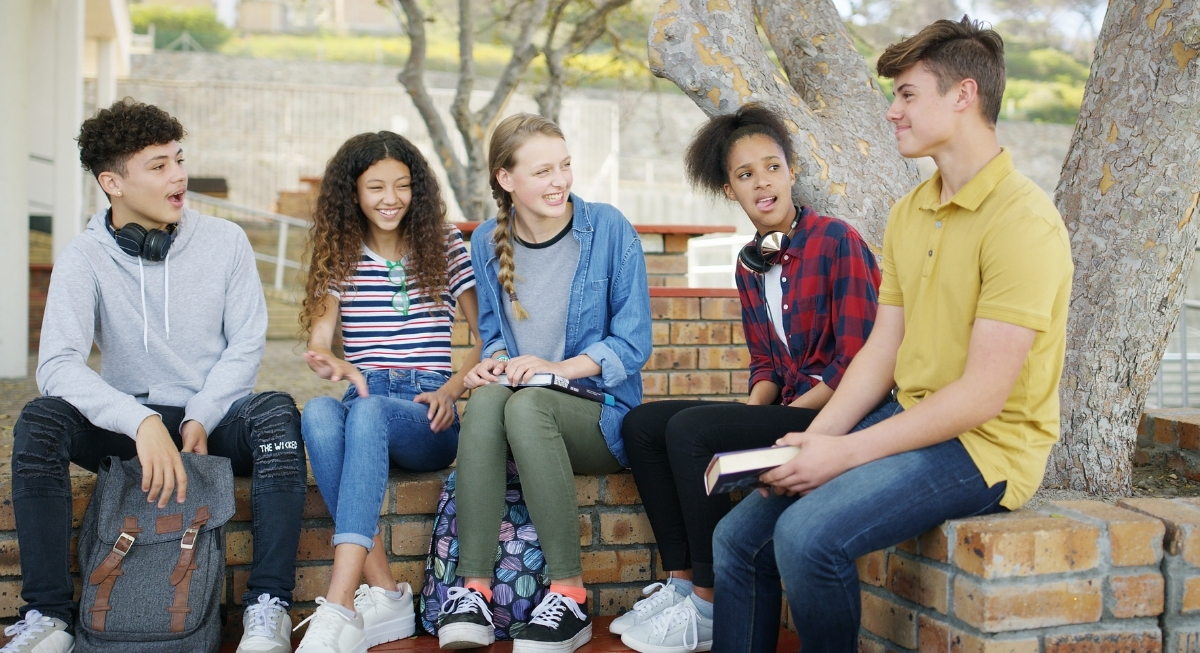
Image via Canva/Peopleimages.com – YuriArcurs
Cultural awareness has also expanded. Many teens today are more engaged in conversations about identity, equality, and social issues, and they tend to show greater acceptance of differences in race, gender, and orientation.
There’s a broader exposure to diverse perspectives, often through digital platforms that connect people across regions and cultures. As a result, many young people approach these topics with familiarity that earlier generations may not have developed as early.
Why These Differences Make Sense
When these changes are viewed together, a clear pattern emerges. Today’s teens are responding to a world that is more connected, more structured around information, and shaped by longer timelines for education and work.
It’s tempting to compare generations and decide that one did things better. But that comparison overlooks the role of context. Each generation adapts to the conditions it inherits.