How a Low-Budget Horror Movie Tricked the Entire World Into Thinking It Was a Documentary
When the Blair Witch Project opened in 1999, audiences expected a shoestring horror project. What they encountered looked almost too real for comfort. The actors went by their actual names, the camera work felt genuinely unsteady, and the scenes played out with the kind of tension you only get when people aren’t sure what comes next. Nothing about it resembled a polished studio release, which made it easier for viewers to believe they were watching the remnants of a real trip into the Maryland woods.
By the time the final shot faded, the room held a different kind of silence. People weren’t debating plot twists; they were trying to decide if those three students were actors or missing people. The film left them sorting through their own doubt, and that intentional blurring of reality is what turned a tiny production into a global phenomenon.
The Seed Of A New Kind Of Scare
Two filmmakers, Daniel Myrick and Eduardo Sanchez, had been talking about why horror felt predictable. The patterns were easy to spot, and the tension rarely lasted for long. They wanted something that stayed under the skin, a scare that didn’t rely on creatures or elaborate effects. Their idea grew into a simple question: what if a movie behaved like evidence?
That thought pushed them toward a stripped-down style built on improvisation, handheld cameras, and a story that unfolded with the messiness of real life. They worked for years on a backstory to make their fictional legend feel local and lived-in. Missing children, an old cabin, an accused woman banished into the cold. None of it needed big visuals. The “Blair Witch Project” worked because it sounded like something a town might whisper about.
A Crew Tossed Into The Woods
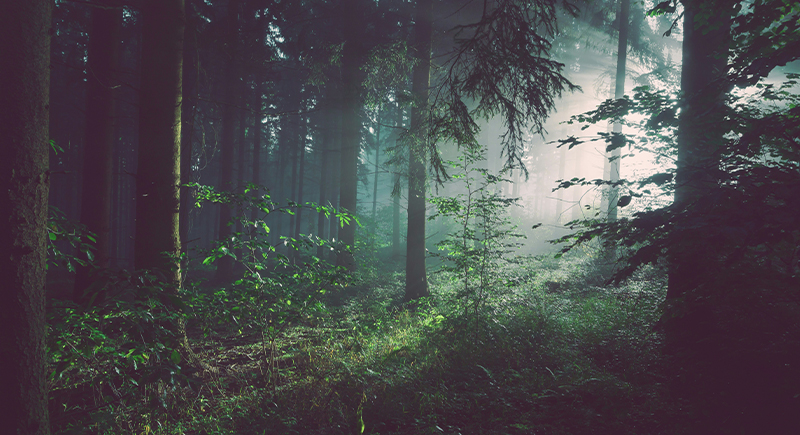
Image via Unsplash/Sebastian Unrau
For casting, the directors chose actors whom no one recognized, trusting them to handle long stretches of unscripted scenes. They were given a loose idea of the story, but the twists and turns were kept from them. Once production started, the three of them moved through the woods by following GPS points and collecting fresh instructions at each stop. Their meals were limited throughout the shoot, which left them tired, hungry, and impatient, as evidenced by their appearance on camera. That strain shaped the arguments, the pacing, and the sense that the situation was wearing them down for real.
Strange noises at night, piles of rocks outside their tents, and sudden scares were all orchestrated but never explained to them in advance. Their reactions remained raw because they never knew what the next hour would hold. The less they expected, the more convincing their fear looked.
The Marketing Strategy That Worked A Little Too Well
The real magic happened before anyone reached a theater. A small website appeared online, written like a genuine investigation. It had fake police reports, timelines, interviews, and notes about three missing student filmmakers. At the time, many people still treated anything published on the internet as reliable. The mystery spread fast. Fans hunted for clues. Message boards lit up with theories. The actors’ IMDb pages even listed them as missing.
People walked into theaters carrying all that uncertainty with them, which altered how the movie was perceived. They were primed to watch it like evidence instead of entertainment. The jittery camerawork made sense in that mindset. The long stretches of near-empty darkness made sense, too. Instead of waiting for a monster to jump out, everyone leaned forward, trying to catch a sound or a shape. Their own imaginations filled in the rest.
The Shockwave That Followed
Image via Unsplash/Jake Hills
Once audiences realized the truth, reactions shifted. Some viewers loved how deeply the experiment pulled them in. Others felt misled and pushed back hard. That frustration didn’t slow the frenzy at the box office. Made for a fraction of a typical studio budget, the film soared past expectations and became one of the highest-grossing independent movies ever released.
Its influence didn’t fade. The found-footage style spread across horror, spawning sequels, spoofs, and plenty of imitators. Some leaned into slicker production. Others stayed closer to the DIY spirit. But that original spark came from the way the mystery reached people long before they sat down with their popcorn.