Everyday Things With Secret Purposes You Didn’t Know About
The objects we use all the time don’t usually get much attention until they stop working. But look closer, and you might notice tiny design details that aren’t just for show. Turns out, plenty of everyday things have extra functions that go unnoticed, even though they’re right in front of us. Once you know what they do, you’ll never look at these items the same way again.
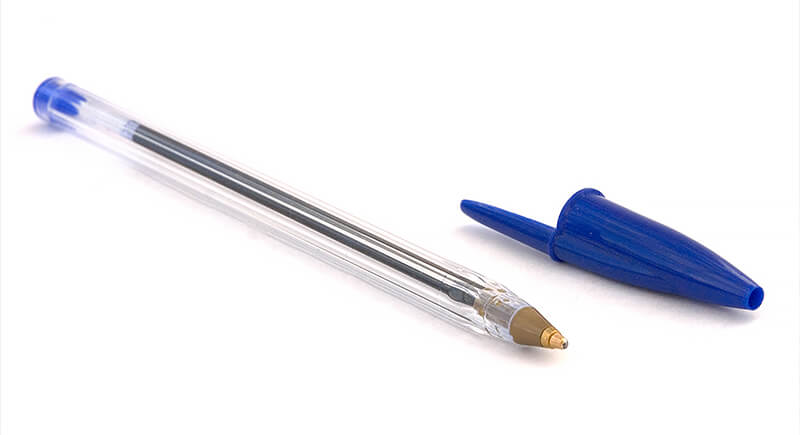
The Hole in a Pen Cap Could Save a Life
Credit: Wikimedia Commons
The tiny hole at the top of a ballpoint pen cap is actually a safety feature. If the cap gets swallowed by accident, the hole allows air to pass through and helps prevent choking. This design became standard after reports of children swallowing pen caps led to medical emergencies.
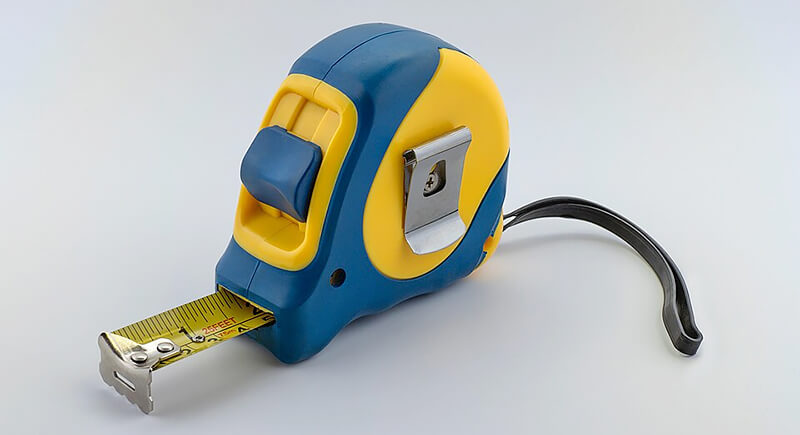
Your Tape Measure Was Designed to Hook and Mark
Credit: Wikimedia Commons
Ever notice the jagged edge on the metal tab of a tape measure? It’s meant to drag a light mark across a surface if you don’t have a pencil nearby. The tip also moves slightly on purpose—it compensates for its own thickness so your measurement stays accurate.
Escalator Brushes Are More Than Shoe Shiners

Credit: Getty Images
Those stiff side brushes on escalators are a subtle safety feature. The bristles discourage people from standing too close to the edge, where clothes, bags, or loose shoelaces could get caught. It’s a clever bit of visual and physical design that keeps riders a little farther from danger.
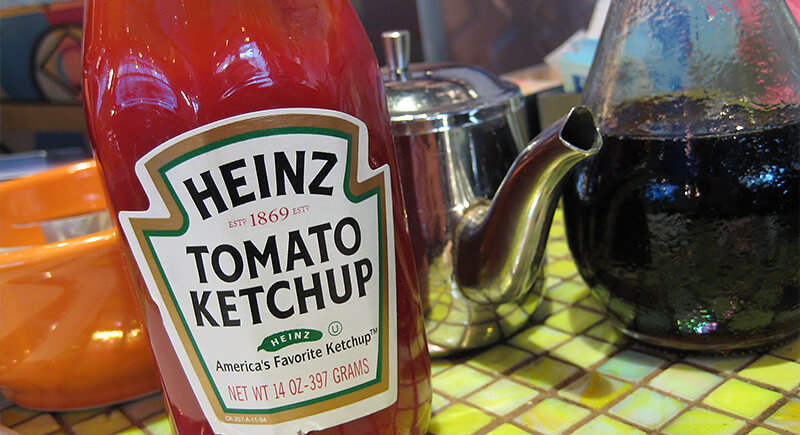
The 57 on a Heinz Bottle Shows the Sweet Spot
Credit: Wikimedia Commons
The raised “57” on glass Heinz ketchup bottles is actually a tactile guide. Tapping the number at a slight angle helps the ketchup flow better than hitting the bottle’s bottom. Heinz confirmed this tip, and once you try it, you’ll probably stop smacking your hand red every time.
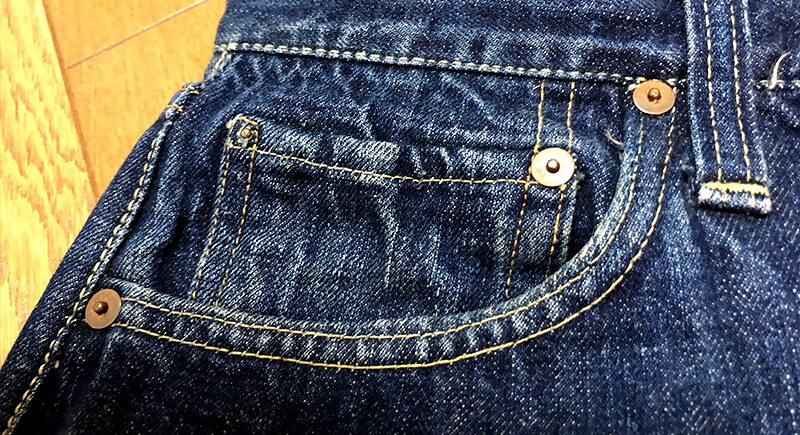
Jeans Rivets Hold More Than Style
Credit: Wikimedia Commons
Copper rivets on jeans exist for one reason: durability. Back in the 1870s, miners and laborers needed work pants that didn’t fall apart at the seams. So Levi Strauss patented the use of rivets to reinforce stress points. The style stuck around, but the function is still doing its job every time you shove your hands into your pockets without thinking.
The Arrow by Your Gas Gauge Isn’t Decorative

Credit: Canva
Next time you borrow or rent a car, look at the gas icon on the dashboard. There’s usually a small arrow next to it. That arrow points to the side of the car where the fuel door is located. It’s built into most modern vehicles and comes in handy when you’re pulling into a gas station.
The Hole in Spaghetti Spoons Is a Pasta Portioner
Credit: Facebook
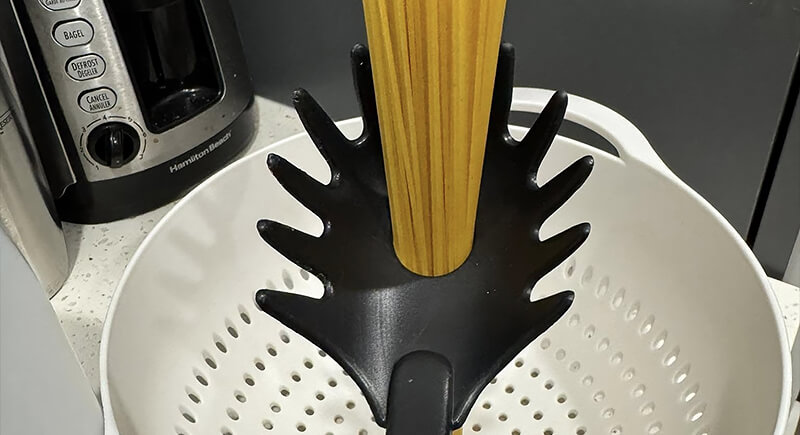
The round hole in a spaghetti server is sized to measure one serving of dry spaghetti. Just slide the dry noodles through until the hole is full—that’s roughly one portion. It won’t be exact for every brand, but it’s surprisingly close.
Prescription Bottles Can Be Flipped for Easier Use
Credit: Wikimedia Commons
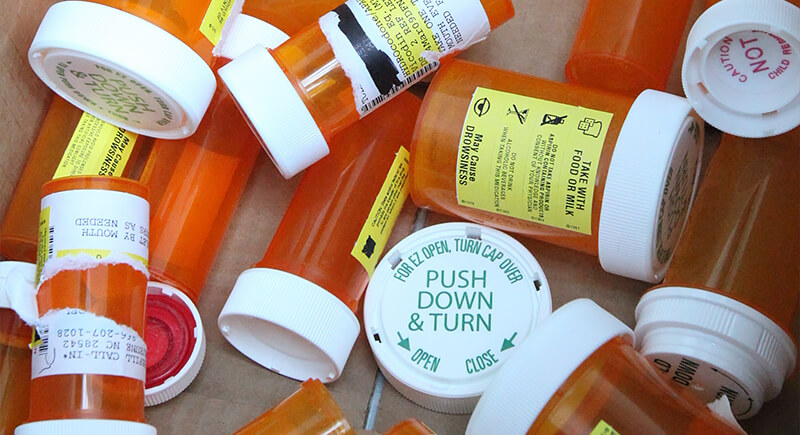
Childproof caps are a headache for some adults, but many prescription bottles have a built-in workaround. Flip the cap upside down, and it screws on normally without the safety lock. This reversible design is intentional, and many pharmacies will note a preference for “easy open” if requested.
Microwaves Often Have a Mute Option
Credit: Youtube
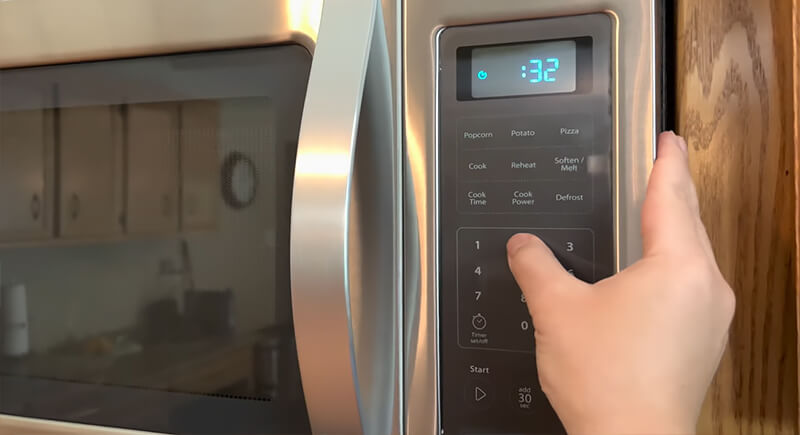
Many models let you turn off the sound by holding down a specific button—often 0, 1, or the stop key—for a few seconds. This trick is buried in the manual, so most people are unaware that it’s possible. It’s especially useful when you’re trying to heat leftovers without waking the whole house.
Toothpaste Isn’t Just for Brushing Teeth
Credit: Youtube
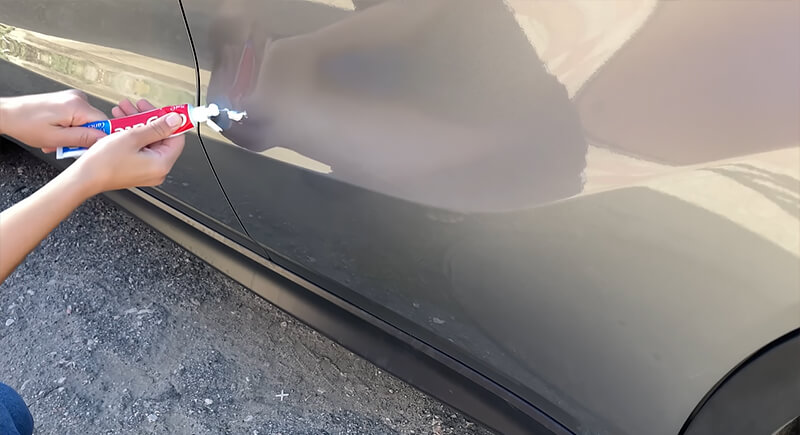
Toothpaste works surprisingly well as a mild cleaner, especially for removing scuffs on shoes or polishing tarnished silver. The abrasion helps lift stains without being too harsh. Non-gel, white toothpaste is usually best for these odd jobs. Just don’t get carried away—it’s not made for everything, and whitening formulas can sometimes be too strong.