Can Trees Explode During Winter Weather?
During recent winter cold snaps, videos have spread online showing trees splitting apart with loud, sudden cracks. Many of the clips were recorded during subzero conditions across parts of the United States and reposted as major winter storms moved through. The sound is often described as an explosion, and in some cases the moment is caught on camera as a trunk splits or a heavy branch drops.
Meteorologists and forestry experts say the damage and noise are real, but the cause is often misunderstood. Rapid temperature drops place stress on moisture and sap inside a tree. When that pressure releases all at once, the wood can split instantly. The sharp crack can echo like a gunshot or an engine backfire, which explains why these recent videos feel so jarring even though the process itself is natural.
What Is Actually Happening Inside the Tree
The event people call an explosion has a scientific name: a frost crack. Trees contain sap, which includes water. During sudden temperature drops, that water freezes and expands. Expansion creates internal pressure along the trunk or branches, and when the stress exceeds the wood’s capacity, the tree splits.
Researchers explain that sap can remain liquid below freezing through a process called supercooling. Once it finally freezes, the expansion happens fast, and that rapid shift produces the loud crack people hear. The tree does not burst apart, but splits along natural weak points in the wood.
Why Some Cracks Sound So Violent
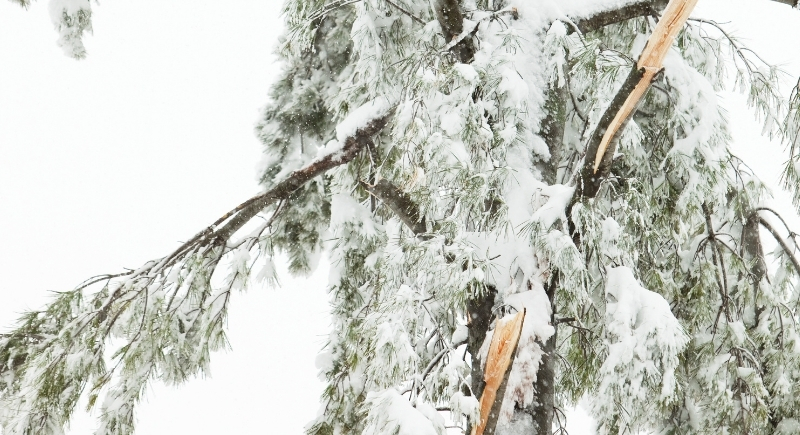
Image via Getty Images/BanksPhotos
The noise surprises people more than the damage. Cold air is denser, which helps sharp sounds travel farther. Large trunks also act as resonant chambers, and when a long vertical crack forms, the release of pressure produces a sharp report rather than a slow tearing sound.
Forest health specialists at the Wisconsin Department of Natural Resources have noted that these cracks can run the full length of a trunk. That length amplifies the sound even if the visible damage looks limited.
Are These Cracks Dangerous to People?
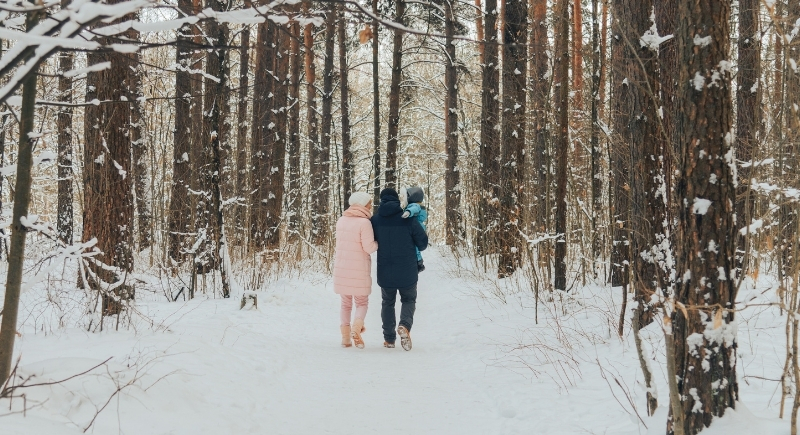
Image via Getty Images/Ilona Hrechkina
The crack itself is rarely a direct threat. The bigger concern during winter storms is what happens after. Ice and heavy snow load branches with extra weight, and when that weight combines with existing cracks or weak joints, branches can fall.
Large limbs pose risks to cars, roofs, and anyone standing underneath. Arborists consistently warn that ice accumulation causes far more injuries and property damage than frost cracks alone.
Which Trees Crack More Often
Frost cracking does not affect all species equally. Thin-barked trees tend to crack more easily because they offer less insulation against rapid temperature swings. Maples, birches, willows, walnuts, and fruit trees show up frequently in reports.
Areas that swing between mild daytime temperatures and severe nighttime cold see more cracking than places where winter stays consistently cold. Extension experts with Texas A&M AgriLife Extension have pointed out that trees in warmer regions may not fully acclimate before a sudden freeze.
Many trees recover from this because a crack alone does not automatically kill a tree. Over time, the tree can form new tissue along the split. Problems start when insects, bacteria, or fungi enter through the opening. If freezing damages the base of the trunk or roots, survival becomes less likely. Branch-level cracks usually affect only that section, leaving the rest of the tree healthy.