A Man Flooded 14,000 Acres to Stop His Wife From Coming Home
A massive natural disaster swept across the American Midwest in 1993 and forced tens of thousands of people from their homes. Rivers spilled far beyond their banks, farmland disappeared under water, and entire communities struggled to keep levees from collapsing. The catastrophe stretched across several states and caused billions of dollars in losses.
But one strange detail drew attention away from the disaster itself. Investigators eventually focused on a young man who lived near the Mississippi River. Prosecutors claimed his actions may have helped unleash floodwater across thousands of acres, linking to the Great Flood of 1993.
The Flood That Already Had the Midwest on Edge
By the end of 1992, soil across the Missouri and Upper Mississippi River basins was already saturated after months of heavy rain. Reservoir levels rose, rivers ran high, and storm systems kept rolling across the region through the first half of 1993. This all resulted in one of the most destructive floods in modern American history. The Mississippi River and its tributaries pushed against levees across several states, and more than 1,000 levees eventually failed during the crisis.
The disaster killed 47 people, forced roughly 54,000 residents to evacuate, and caused an estimated $15-$20 billion in damage. Millions of acres of farmland disappeared under water across the Midwest. Among the many levees under pressure that summer was one protecting West Quincy, Missouri, along the Mississippi River.
The Levee Break That Flooded 14,000 Acres
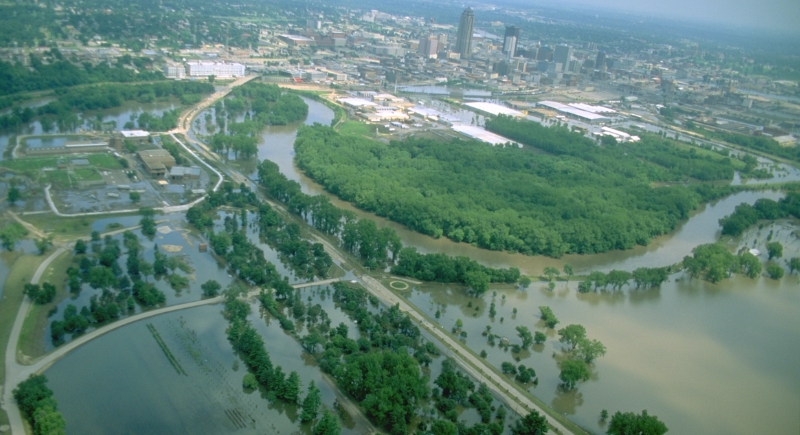
Image via Wikimedia Commons/Andrea Booher
On July 16, 1993, the levee near West Quincy suddenly failed. Water surged through the break and quickly flooded around 14,000 acres of farmland in the area. The flood destroyed homes and businesses and even cut off a major bridge connection between Missouri and Illinois. For communities already struggling with rising water, the breach made conditions even worse.
Investigators later turned their attention to a man who lived nearby: James Scott, a 24-year-old from Quincy, Illinois. Scott initially appeared helpful, and in a local television interview after the levee collapse, he described seeing seepage in the barrier and said he had tried to place sandbags to stop the leak. But the levee had been inspected only a couple of hours before it broke. This prompted questions among investigators, and Scott soon became a suspect.
The Strange Allegation That Followed
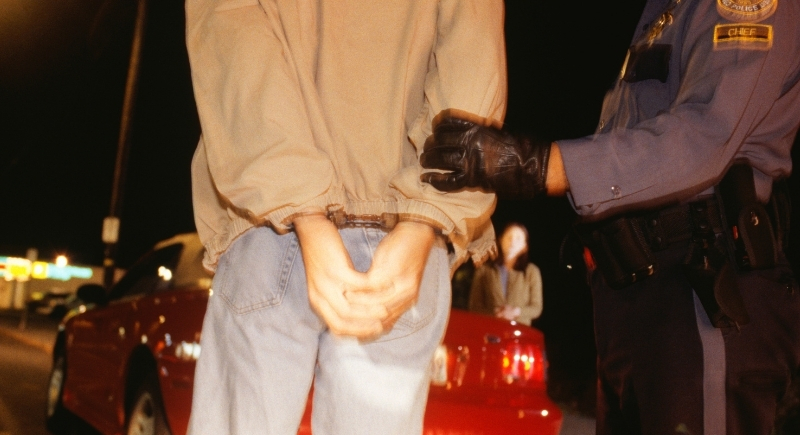
Image via Canva/Doug Menuez
Authorities later claimed Scott had tampered with the levee shortly before it failed. According to investigators, he removed several sandbags from the structure. Scott admitted to taking sandbags away but said he did so to demonstrate a weak spot in the levee.
During the investigation, a witness told police that Scott had previously talked about wanting to keep his wife from returning home. His wife worked at a restaurant in Taylor, Missouri, across the river. The witness claimed Scott joked that flooding could strand her at work while he spent time drinking and fishing with friends. Prosecutors argued that Scott’s actions weakened the levee enough for floodwater to break through.
A Rare Conviction Under Missouri Law
Missouri prosecutors charged Scott under a 1979 state law that makes it a crime to intentionally cause a catastrophe. The case moved to trial later in 1993, and Scott was convicted of the felony offense, and his sentence was 20 years to life in prison. The conviction made Scott the only person in Missouri’s history to be found guilty under that specific catastrophe statute.
James Scott has always insisted he did not cause the levee failure. He argues the structure collapsed due to the extreme river conditions created by the Great Flood. Some observers have also questioned the strength of the evidence used during the trial. Journalist Adam Pitluk later investigated the case in the book Damned to Eternity, which examines whether Scott became a convenient target amid the chaos of the disaster.
Scott repeated his claims of innocence during a 2018 interview with ABC17, saying the jury relied on circumstantial evidence rather than direct proof that he damaged the levee.