A $20 Billion Shipwreck Is Finally Being Recovered After 300 Years Underwater
For more than three centuries, the San José galleon existed as an unresolved historical problem. Naval records and court cases referred to the ship, but the vessel itself remained unreachable, resting on the seafloor since its sinking in 1708. Its absence left important questions about colonial trade, naval conflict, and maritime loss unanswered.
That situation has now changed. Colombia has begun recovering physical material from the wreck using remotely operated deep-sea technology. This marks the first time objects from the San José have been examined directly. Researchers can now study the ship as an archaeological site with attention to documentation, conservation, and historical context rather than extraction or ownership claims.
A Spanish Warship Lost During Imperial Conflict

Image via iStockphoto/Bauhaus1000
The San José was a Spanish naval galleon designed to escort and defend treasure fleets traveling between the Americas and Europe. It was part of the Flota de Tierra Firme, a convoy system created to transport valuable cargo collected from Spain’s colonies.
In June 1708, during the War of the Spanish Succession, the fleet encountered British warships near the coast of present-day Colombia. A naval engagement followed, and the San José sank off Cartagena. Historical records indicate that nearly 600 crew members and passengers were aboard at the time, with only a small number surviving.
Contemporary accounts differ on the exact cause of the sinking. British sources describe an internal explosion, while Spanish documents attribute the loss to battle damage. Regardless of the mechanism, the ship was lost before reaching Europe, along with its cargo.
The Cargo That Fueled Centuries Of Fascination
The San José became legendary because of what it carried. Archival records describe gold and silver coins, precious metals, emeralds, and other royal goods extracted from Spanish colonies in South America. The shipment was intended to support Spain’s military and economic interests during a prolonged European war.
Estimates of the cargo’s modern value vary widely. Some assessments place it in the tens of billions of dollars when factoring in inflation, rarity, and historical significance.
Any estimate remains speculative, as the full contents of the wreck have not been recovered or inventoried. What is clear is that the San José is one of the richest known maritime losses in recorded history.
Locating A Shipwreck Beyond Human Reach
For much of the 20th century, the San José remained undiscovered despite repeated search efforts. Advances in underwater mapping and robotics eventually made it possible to locate wrecks at extreme depths.
In 2015, Colombia announced that it had identified the San José approximately 2,000 feet, or about 600 meters, below the surface of the Caribbean Sea. At this depth, conventional diving is impossible, which explains why the wreck remained untouched for so long.
Following the discovery, Colombian authorities classified the site as protected underwater cultural heritage. Rather than immediately recovering items, researchers spent years surveying the wreck using remotely operated vehicles, documenting its condition and contents through high-resolution imagery.
The First Objects Recovered From The Seafloor
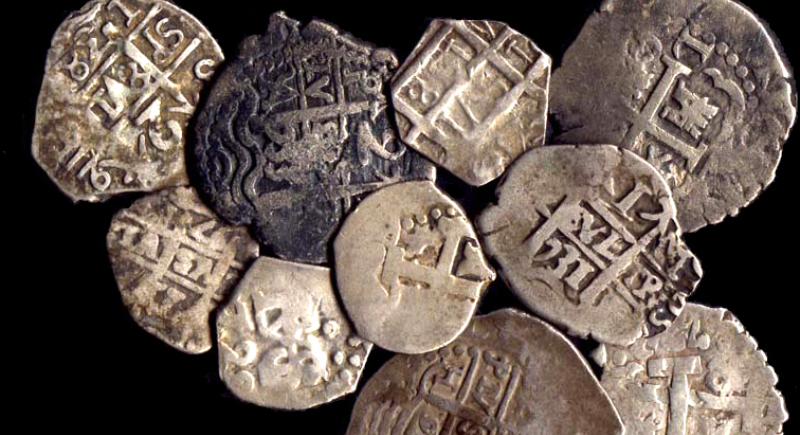
Image via Wikimedia Commons/NachoNumis
In 2025, Colombia confirmed the recovery of the first artifacts from the San José. These items included gold and bronze coins, a bronze cannon, and a porcelain vessel. Though limited in number, the objects provide physical confirmation of historical records describing the ship’s cargo and armament.
The recovery was conducted using robotic equipment designed to minimize disturbance to the wreck. Each item is now undergoing conservation in specialized laboratories. Coins are being stored in controlled saline environments to prevent corrosion, while larger metal objects are stabilized to slow chemical degradation.
Researchers are also analyzing sediment samples taken from the site to better understand how the ship sank and why the wreck has remained in relatively stable condition for more than three centuries.
Competing Claims And Legal Disputes
San José’s recovery has revived longstanding disputes over ownership. Spain argues that the ship was a state-owned naval vessel and therefore remains Spanish property under international maritime conventions. Colombia counters that the wreck lies within its territorial waters and qualifies as national cultural heritage.
A U.S.-based salvage company, Sea Search Armada, claims it identified the wreck decades before Colombia’s announcement and has pursued compensation through international arbitration. Indigenous groups, including the Qhara Qhara people of Bolivia, have also asserted moral claims, arguing that the wealth aboard the ship originated from colonial exploitation of their ancestors.
Colombia maintains that the project is strictly scientific and cultural, not commercial. Government officials have stated that the goal is research, preservation, and eventual public exhibition, rather than sale or division of the artifacts.
The San José Beyond Its Value
While the financial estimates draw attention, San José’s broader importance lies in what it reveals about history. The wreck offers insight into 18th-century naval warfare, colonial trade systems, and the global movement of wealth during the age of empire.
Each artifact contributes to a clearer understanding of how imperial economies functioned and the human labor that sustained them. The site also highlights the ethical challenges surrounding underwater heritage, particularly when valuable artifacts are tied to colonial histories.
Technological advances now make it possible to study sites once considered unreachable. As recovery efforts continue, the San José stands as both an archaeological resource and a reminder of the complex legacy embedded in the world’s oceans.
Most of the ship remains on the seafloor, largely intact. But for the first time since 1708, the San José is no longer silent. Its story is beginning to emerge, piece by piece, offering evidence to explain one of history’s most famous shipwrecks.